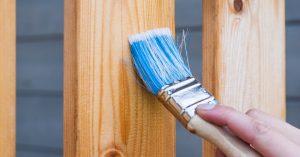
Remodeling

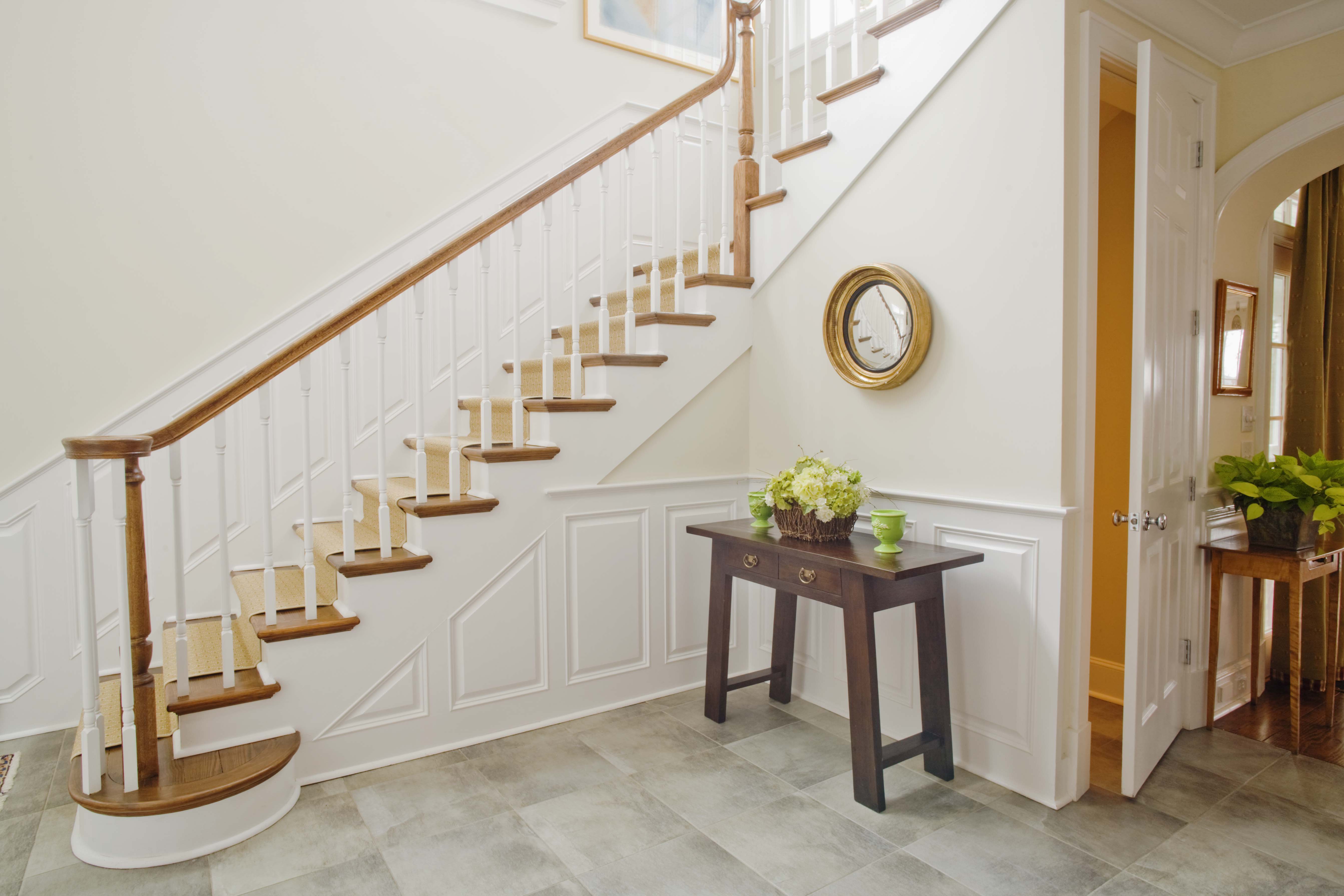
Remodeling your stairs is a great way to freshen up the look of your house, but remodeling should go beyond design – it has have function that equals its form. There some factors we tend to overlook, and for that, we’re providing your with tips and other guidelines that can help you on your next stair remodeling project,

Why are wooden steps more hygienic than carpet?

With the situation the world is in right now, hygiene has become more critical than ever. People have started to be more conscious of their surroundings, especially those frequently being used or touched by others. And while it is hard to control such factors in public areas, there’s a lot we can do to make sure our homes stay more hygienic. 

It’s very common in the United States to have a carpeted staircase. After all, there is great merit in having so. According to the American Journal of Emergency Medicine, more than 1 million Americans injure themselves on stairs each year. While most cases only result in minor injuries, it is estimated that these accidents’ direct and indirect costs amount to $92 billion annually. Carpet staircases provide better cushioning and traction compared to wood. They also trap heat, which helps warm your house during the colder months.  

However, carpet staircases are very unhygienic. They harbor all kinds of dirt, dust, pet dander, pests, etc. They are also painfully hard to clean. What makes it worse is that staircases are high-traffic areas within the home, making them more susceptible to these. 

Having a wooden staircase is a more hygienic option. You may find yourself sweeping it often, but it is only because the dirt doesn’t sink deep into it, unlike on carpet. 

Think about all these things that may have been hiding under your carpet staircase: 

Bugs

Carpets can be a home for different kinds of bugs. Bed bugs, fleas, dust mites, and carpet beetles are notable ones. The environment lets them proliferate and makes them difficult to remove. You wouldn’t want your staircase to be a breeding ground of pests. They can bring you and your family all kinds of diseases.  

Molds

Another big problem with carpet is that it absorbs many fluids and moisture. If you spill any food or drink on it, it will seep deep into the carpet fibers very fast. That creates a perfect environment for growing molds. Molds can give your house an unpleasant smell, and the spores they produce can trigger allergies.  

Skin

Yes, skin. The average human sheds about 8 pounds of dead skin each year, leaving a trail of dead skin cells wherever they go. If you have a carpeted staircase, some of those probably got trapped between the fibers, where they become food for dust mites. Nasty.  

Pollen

At certain times of the year, pollen becomes a real problem for those suffering from hay fever. Carpet staircases don’t help at all. When pollen seeps into the house through the doors and windows, or even by hitching on your clothes, they may find their way to the carpet, sticking there for a long time.  

Pet dirt

If you own a pet, it’s pretty much automatic that some of their dirt gets trapped in the carpet. But even without a pet, your shoes pick up bits of animal waste just by simply walking outside. This dirt gets wiped off onto the carpet when you get home. 

These things are what’s lingering in your carpet staircase, even if you thought you’d cleaned them thoroughly. It’s challenging to be sure that your carpet staircase is completely clean; that’s why it’s more advisable to have a wooden staircase at home. You won’t have to worry about the things mentioned above with a wooden staircase. After all, there are things you can do to make your wooden staircase less accident-prone. 

So if you’re planning to switch to a wooden staircase, contact iStairs! We are your number 1 custom stair builder in Northern California! We can build a staircase for you just the way you like it. Call us at 844-STAIR-4U, and let’s get started

Different Types of Stairs, Their Pros, and Cons

Stairs are an integral part of up-and-down households, buildings, and other business establishments with two floors or more. In a previous article, we talked about stairway design ideas and how to jazz up your stairs to add oomph, flavor, and personality to them — and ramp up the stairway experience (pun intended). 

This time, let’s focus on the underlying structure underneath the design we see. Let’s go through the different types of stairs you can choose from when designing your space, their advantages, and their disadvantages. 

Straight staircase 

A straight staircase is probably the most basic, common, and simple of all types of staircases. Its parts are usually available pre-cut or pre-fabricated in home stores, making it more affordable than other kinds of stairs in terms of the construction process. 

Advantages: 

  • Doesn’t need any support other than the attachments at the top and bottom 
  • Railings and handrails are easier and faster to install 
  • Easier to dress up because it is one straight line 
  • For the user, it is easier to use when going up and down 
  • Blends in easily with minimalist or simplistic interior design 

Disadvantages: 

  • For the detail-oriented with design and space, they take up more linear space 
  • They do not offer privacy 
  • Dangerous in terms of falling down because one misstep could lead to a long fall 
  • One flight can only accommodate 16 steps. More would require a central landing which will then take up more space.

 L-shaped staircase 

An L-shaped staircase is a flight of stairs with a turn, either in the middle or near the bottom towards the landing or floor. This is also a common design because it takes up less space and is easier to decorate. It is also called the “dog-legged” or “quarter turn” staircase.  

In some cases (and where there is more space), L-shaped stairs are divided into three flights and, therefore, have two turns. This is referred to as the “threefold” stair design. 

Advantages: 

  • The landing can be decorated and even be used as a functional space 
  • Takes up less space and can be placed in corners 
  • There’s a break in climbing up and going down (easier to use) 
  • They serve as a barrier between floors and offer more privacy 
  • They work with acoustics within four walls and help in sound transmission 

Disadvantages: 

  • They are more complex to build and are, therefore, more expensive 
  • They require more materials for turn and landing support 
  • Handrails are more complex to design and construct 

U-shaped staircase 

A U-shaped staircase is a staircase where you do a 180-degree-turn when you climb it at the landing, also called a switchback. Because of this, this stair design is also known as the “switchback” or “half-turn” stairs. 

Advantages: 

  • More visually appealing than a straight staircase 
  • Wider landing which you can have fun with decorating 
  • Can also be installed in corners and are, therefore, space savers 
  • The landing provides extra space and can become a useful nook 

Disadvantages: 

  • They are more difficult to build 
  • The turn may make it difficult to move furniture up and down the stairs 

Winder staircase 

Winder stairs are sort of like L-shaped stairs but — instead of a landing at the turn — there are triangular or pie-shaped steps to keep the flight continuous at the turn. There are no stops. This stair design is making a comeback along with the rising popularity of tiny homes. 

Advantages: 

  • They require less space than the L-shaped stairs and other stair styles 
  • They are visually attractive in that they showcase a “seamless” transition between floors 

Disadvantages: 

  • They are trickier to navigate especially for the accident-prone 
  • They are harder to design and construct handrails for 
  • The turn steps require support like the usual landing and will cost more 

Spiral staircase 

Did we just make you sing, “I love you more today that yesterday!”? Fun, isn’t it? The spiral staircase (namesake of the popular 1960’s pop band) is considered a novelty design that is nice to look at, perfect for small spaces, but can be quite hard to navigate. 

(Let’s put it this way: They are nice to look at but not as nice to go up or down on.) 

Advantages: 

  • It is perfect for lofts (one of those stair designs that fall under “corner stairs”) 
  • It is fun to design and nice to photograph and look at as a design feature 
  • The steps go around a central pole. Hence, this design does not require much in terms of support. 
  • It is easier to construct 

Disadvantages: 

  • Only one person at a time can go up and down 
  • Not for the accident-prone since the inner part of the steps are narrow (the solution is to make the steps wider or to increase the diameter) 
  • Hard to move furniture up and down if it is the only way up and through 

Corner staircase 

Corner stairs are commonly seen outdoors or in decks when a home or building owner wants to maximize the space leading to the entrance or deck and build a “wraparound” staircase with three sides.  

Advantages: 

  • Adds to the access points of the building or home for three-sided stairs 
  • Contributes to the uniqueness of the design in cases where steps leading up a home or establishment are built at the corner instead of the usual middle part of a facade 
  • Can require only one bannister in the middle that can be used for both sides or for each corner 

Disadvantages: 

  • May feel strange to navigate for those not used to this type of stair design 
  • Not for the accident-prone as the sharp corners may cause real damage 

Split staircase 

Nothing can give a home a grander feel than the split staircase, also known as “bifurcated” stairs. It is probably the most common stair design in movies or television series where a character is portrayed as being very rich (think “The Sound of Music” and the Von Trapp home). 

The split staircase can be designed two ways: first, with steps leading to a landing where you find steps to your left or right; second, with two sets of stairs leading up to a landing that leads to one flight of stairs going up. Very fitting for the foyer at the main entrance of a home. 

Advantages: 

  • Makes a grand statement for your home (it is not called the “grand dame of stairs” for nothing) 
  • It can serve as a point of interest in your home, depending on its design 
  • The lines add to the depth of your space and give the illusion of an even bigger space 

Disadvantages: 

  • Large means expensive, with all the support its construction requires 
  • May require a lot of space which not all can afford nowadays 

There you have it: the most common types of stairs and their advantages over the other as well as their disadvantages. Your stair design of choice is completely up to you and however, you wish to maximize your space (and decorate it, for that matter). 

Related blogs:

https://www.istairs.net/blog/how-to-choose-the-right-staircase-for-your-house/
https://www.istairs.net/blog/14-stairway-design-ideas/
https://www.istairs.net/blog/creative-staircases-for-tiny-houses%e2%80%af/

iStairs, Inc. is a residential and commercial stair contractor specializing in production homes, single homes, and remodelling.

View our Contact Us page for hours and directions. We look forward to helping you build the custom staircase of your dreams!

5 Reasons To Choose Oak: Recommendations From a Sacramento Staircase Contractor

If you’re planning a home renovation project, particularly, one that involves installing a new staircase, using oak provides a good number of benefits that other materials don’t quite offer.

From Sacramento staircase contractor iStairs, Inc., here are five reasons why you should consider using oak for your new staircase:

Attractive Appearance

Oak instantly adds character to your home with its rich color, elegant texture, and distinctive material.

It has quite an attractive wood grain, especially if it is quarter-sawn, make it a top choice among carpenters and homebuilders alike.

Strength and Durability

Oak is known for its strength, its resistance to moisture, and its durability.

It’s one of the densest naturally occurring materials, making it one of the most in-demand hardwoods in the woodwork industry.

The sturdy oak has a high tolerance to the stresses brought on by weather conditions in California, even as it changes from season to season.

Furthermore, oak contains a high amount of tannin, which makes it naturally resistant to insects and fungus alike.

Using oak for your staircase (as well as your support beams and foundations) is a sensible choice. Older homes and structures built from oak are still standing many years, decades, or even centuries later.

The oak itself gets stronger and a lot more resilient the older it becomes.

Readily available in Sacramento

There are about 600 species of oak all around the world, but California’s own Sacramento valley is particularly known for its native oak trees.

According to the Sacramento tree foundation, the three most common varieties of oak are:

  • The valley oak, which is the largest tree in Sacramento Valley.
  • The interior live oak, which is the most common evergreen oak tree in the valley.
  • The blue oak, which is the most common of all our oak trees.

There are other species of oak growing in and around Sacramento, and each species of oak is used differently because of their varying attributes.

iStairs says oak staircase parts and custom installations are at the top of the list of projects they typically handle as stair contractors.

They usually work with a fairly diverse selection of other oak wood materials as well — the natural brown oak wood, the stripy tiger oak wood, the cat’s paw pippy oak, burr oak wood, and the rare bog oak wood

Oak is Sustainable

Despite it being so common in the Sacramento Valley, we support efforts to use oak responsibly and sustainably.

Oak is classified as a premium material, and its price is largely dictated by the regulated supply in the building industry so we don’t use too much oak timber faster than we can regrow oak trees.

As such, oak is used in homebuilding as showcase pieces– in situations or home projects where the finished oak structure can be cherished and fully appreciated.

Oak is an Environmentally-Friendly Option

Oaks generally don’t require large amounts of fossil fuel to produce, nor do they require much industrial processing or chemical treatments. (Unlike brick or concrete, for example, which does go through a lot of industrial processing.)

As trees, oaks spend their entire lives absorbing carbon dioxide from the atmosphere and releasing oxygen. The carbon captured from the atmosphere is bound into the fibers of these oaks for hundreds of years. And even as you chop down a tree and build a house out of it, the carbon remains within the material permanently.

Also, oak requires little maintenance, so its cost, in the long run, is relatively much lower. All it requires is a bit of cleaning and polishing now and then, and you can count on its natural beauty to last for many years to come.

About Sacramento Staircase Contractor iStairs, Inc.

iStairs, Inc. is your one-stop shop for residential staircase finish carpentry. Ask about our stock availability for oak wood and more details on our custom stair installations.

Oak Stairs

Whether you’d prefer to do-it-yourself or have us design and install your stairs for you, we can work on just about any staircase project you have in mind.

iStairs has been proudly serving communities across Northern California, with a showroom to accommodate inquiries and appointments. Give the iStairs team a call today at 844-STAIR-4U or 916.853.1499.

Sources

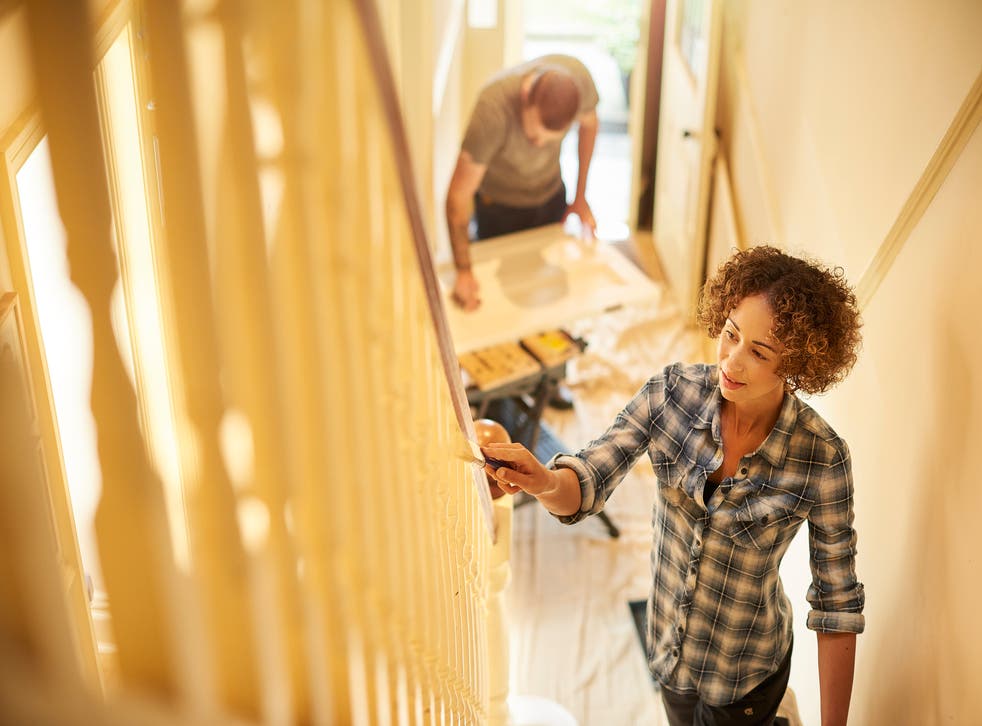
A Quick Guide to Painting Your Stairs

Painting your beloved stairs can be nerve-wracking and fun at the same time. It is fun because you can breathe new life out into an old staircase and nerve-wracking because anything can go bad starting with removing the old paint and discovering some secrets that lighting and old paint hid from you over the years.

So, here is some quick fix on how you can transform your staircase:

1.    Clean, clean, clean

Before you start painting your staircase, be sure to clean the area thoroughly. Having lumps and bumps on your staircase when you apply the first coat of paint will not make the task easier for you. 

Be sure to remove dust that has settled over the years on the corners of the steps, spider webs that have been comfortable sitting under your levels. 

2.    Peal old paint

This task is tedious. It will require you a lot of hours to do. You will scrape and even out surfaces, so it is well prepped for the first coating of your paint.

When you start peeling the paint of your old stairs, be careful not to harm the wood of your stairs. Often, when individuals want to speed up the process, they forget to be gentle on the material of their stairs, hence leaving more problems. 

Some homeowners are shocked to learn that they have to even out the surface of their stairs with sandpaper. If at this point you feel the need to call a professional to help you with the redesign you really want, you can call iStairs for an extra hand to help you execute your new plans.

3.    Choose the correct paint

All stairs are composed of different materials. Some are made from hardwood, others from steel, and there are combinations too. That said, some paints are not compatible with the material of your stairs, be sure to purchase paint that will blend well with your beloved centerpiece.

4.    Paint like a pro

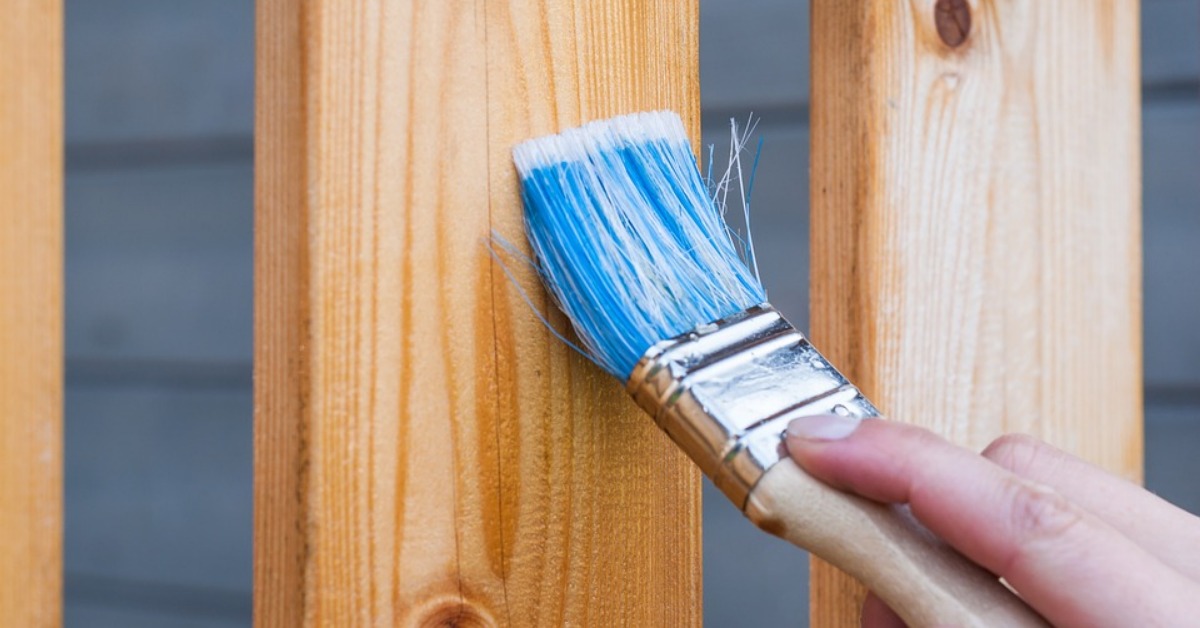
There are several ways to paint stairs. There is spraying, and there is brushing, end there are rolls too. When decorating your stairs, use the method you are most comfortable with and most natural for you to manage. 

Do not attempt to spray paint your stairs if you cannot assert the thickness that you need for the area or if you have a “heavy hand.” Chances are, your stairs will have uneven hues; some areas too dark, other too light. 

5.    Bring in the experts

With years of experience under our belts your stairs will be looking new in no time. Our team can help you during your remodel.

For more details about the services we offer, do not hesitate to reach us or give us a call. Our staff would be glad to assist you.

Tips for remodeling your staircase while on a budget

There are a number of good reasons why homeowners will choose to remodel their stairs, be it to spruce up the interior of the home before putting in on the market, to modernize the design of the home, or simply to make repairs on an aging or damaged set of stairs.

While each staircase situation is unique So whatever the reason may be that you have decided to remodel your staircase, let’s take a look at some tips that will help you save money and plan your staircase remodel on a budget!

    1. Determine if any of the staircase components can be savedBased on the condition and continued functionality of the staircase component, there are many parts of the staircase that could be salvaged during a remodel. The newel posts, tread caps, and handrail are often components of the staircase that don’t need to be completely replaced during a remodel. Instead, focus on replacing the balusters if you are to replace something on the staircase, as they take up most of the visual impact of the staircase in general.
    2. Improve appearance of existing staircase parts with paints and/or stains
      Simply with an updated shade of paint or for example, painting the balustrades white and staining the newels posts, landing caps and handrail a darker color, you can dramatically makeover the appearance of your entire staircase, without spending an arm and a leg.
    3. Upgrade lighting and tread features to give staircase inexpensive makeover
      You’d be surprised by the dynamic change that can take place with a little improvement in lighting and the tread features of your staircase. By simply enhancing the lighting around the staircase say through better placement of light fixtures for visibility purposes, or even using LED lighting systems, not only will your staircase become more functional and safer to use, it will also become a focal point of design for your home.
    4. Take advantage of overstock items from staircase companies
      If you are fortunate enough to be in the market at the right time, you can often find discounted staircase parts for your remodel from companies who have them in overstock. Staircase companies may have overstock items for a variety of reasons, so if you can find the parts or supplies at discounted price due to overstock, it’s always in your best interest to take advantage of these options.
    5.  Be smart and patient with your decisions for your staircase remodel and don’t jump into a quick fix you might later regret
      While time may be of the essence if you are planning on moving or need to start repairs on an old staircase, sometimes it’s in your best interest to be patient with your options when you’re remodeling your staircase on a budget. Primarily, this is because it’s best to wait a little longer to find the exact staircase remodeling option that meets the needs of the goals you have for your home, without compromising to safe a few bucks.
      If you really want to save money and invest in the smartest staircase remodel for your home, it’s in your best interest to consult with a professional staircase company who has experience with a multitude of different staircase remodeling projects, even those of which are operating on a budget.

If You Can’t Move, Then It’s Time to Improve!

Have you been thinking about moving to a new home because your current house is in need of a few updates or improvements, but putting your house on the market right now doesn’t sound very appealing? Well, there’s no need to move just yet if you can make improvements to your home and increase its overall value so that when you are finally ready to sell, you can thank yourself all over again for the improvements you decided to make today!

But why make the same old, run-of-the mill home improvements that everyone else makes when you can update a feature of your home that is already a central part of your home’s design? Why not improve upon the appearance of your staircase as a way of updating your house this summer! Below we have compiled a short and simple list of ideas that you can use to improve the interior design of your home by way of your staircase.

While a complete staircase replacement is always an option with professional companies like iStairs, here are some elements of your staircase that you should consider updating when looking to improve your home this summer:

  • Paint or stain your staircase: Never underestimate how much of an impact a fresh coat of paint or wood stain can have on a staircase, but remember that you must consider the characteristics of your staircase when choosing which finish type is best. For example, aluminum and stainless steel staircases can be finished with powder coat finishes or even be amplified with a unique glass bead blasted look. And while there are a number of choices to pick from when staining your wooden staircases, some of the common options are oil, epoxy, stains, and polyurethane finishes, the last of which is used to seal the stairs from damage.
  • Update the balustrade: The balustrade is the vertical posts which support the railing of a staircase, and the balusters are the individual posts themselves which can be designed/shaped in a variety of different styles. Whether the balustrade is made of metal or wood, replacing old balusters or outdated spindles with more modernly styled balusters can instantly refresh the look and feel of your staircase as a whole.
  • Remove carpet for more natural appeal: If for example you have a traditional, old wooden style banister with carpeted stairs, one way of improving your staircase would be, in addition to painting and staining the stair railing more of a modern color, to remove the outdated carpet and even paint or stain the underlying treads as well. For safety purposes, if you have elderly people or children in your home who use the stairs, it’s always a good idea to consider installing some type of rubber non-slip grips on the edges of the tread. Another idea is to find a stylish runner to have along the middle of the stairs right on top of the treads, instead of carpet as well. Moreover, a runner actually serves multiple purposes, including safety and style enhancement and noise reduction

If however you are partial to the idea of carpet on your stairs, you can at least consider sprucing up your staircase with a newer, more modern type of carpet on your stairs.

So there’s no need to worry about putting your house on the market when you can start to make valuable and attractive improvements to your home today! And why not give your staircase a second chance with some much needed improvements this summer?

How a Custom Staircase Can Makeover Your Home

Staircases are one of the most versatile pieces of your home’s structure. In some spaces, they are the showcases of a grand entrance hall. In others, they are simply a required element in the home that blends into the rest of the house.

No matter how you incorporate your staircase’s design, you want it to enhance your home. There are a few things to think about when it comes to custom staircases.

Space: When you decide to build a custom staircase, you first have to look at the space that is available to you. If you have a small area, a spiral staircase might be your best bet. If you have a large front entry you have a lot more space to be able to put wide stairs with a number of different types of railings for effect. Having a spiral staircase in the corner of a small room can add texture where a blank corner would have just looked drab and empty.

Access: After determining the space allowance for your stairs, you need to look at the access to your stairs. In smaller access areas, you aren’t going to want huge banisters that make it difficult to maneuver around. You will need to go with something sleek and more minimalistic to fit in the area allowed. Again if you have a small access area, going with no railing might be an option to open up the access area. There are lots of different ways to design around your access point. Adding flair and paying attention to detail in your access points can really make your staircase a true focal point. Especially if you have a large access point, having a large staircase with an impressive banister can open the area up and really draw your eyes to your staircase.

Material and Design: When deciding what type of material and design you want for your stairs, it is wise to look around and figure out what the design of the rest of your house is and fit your custom staircase into that design scheme. If you have a country style house, you aren’t going to want an intricate metal railing. You would want to go more with a wooden type banister to fit in with the rest of the wood in your house. If your house is more modern there is a large variety of new designs and colors available to truly customize your stairs to your surroundings and your personality. This is where you can truly make the area of your house with your staircase a showstopper. There are so many different materials available these days, and the designs are endless when customizing.

Economic: Staircases can range from the low end of cost with DIY pre-fabricated kits, to very high-end expensive hand crafted. Being aware of your budget and what you are able to afford will help determine what material and design you will use for your custom staircase. If you choose the DIY route, be aware that if anything breaks it is up to you to fix it. Most staircase companies offer some type of warranty. This can be very helpful in the future if something breaks or is not how it was intended to be.

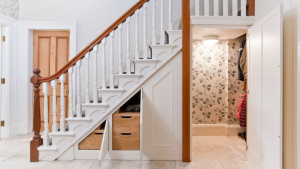
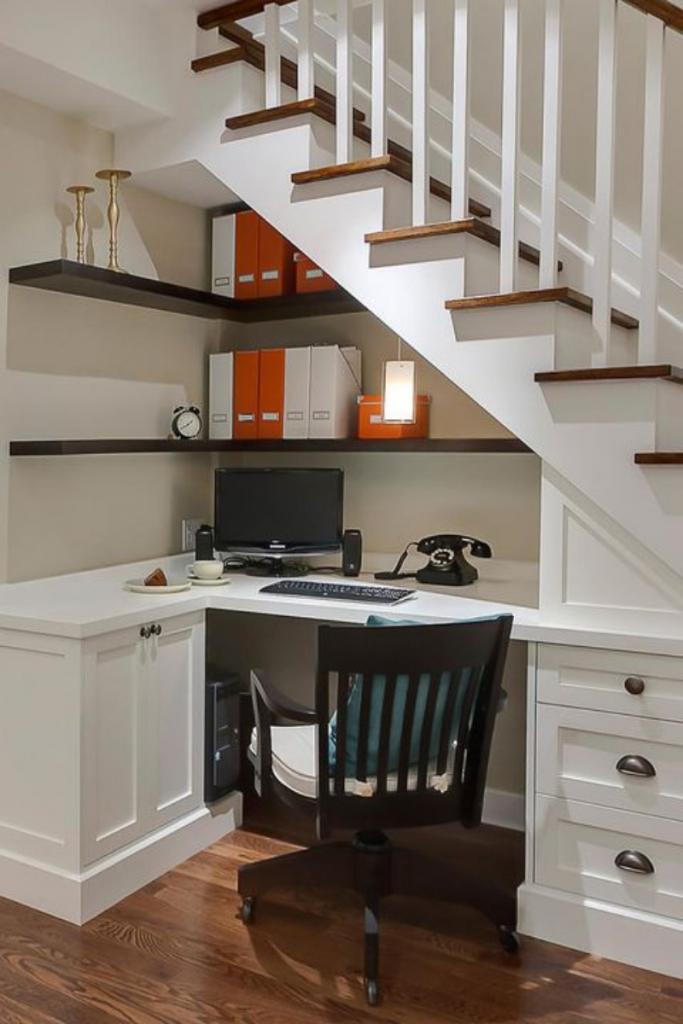
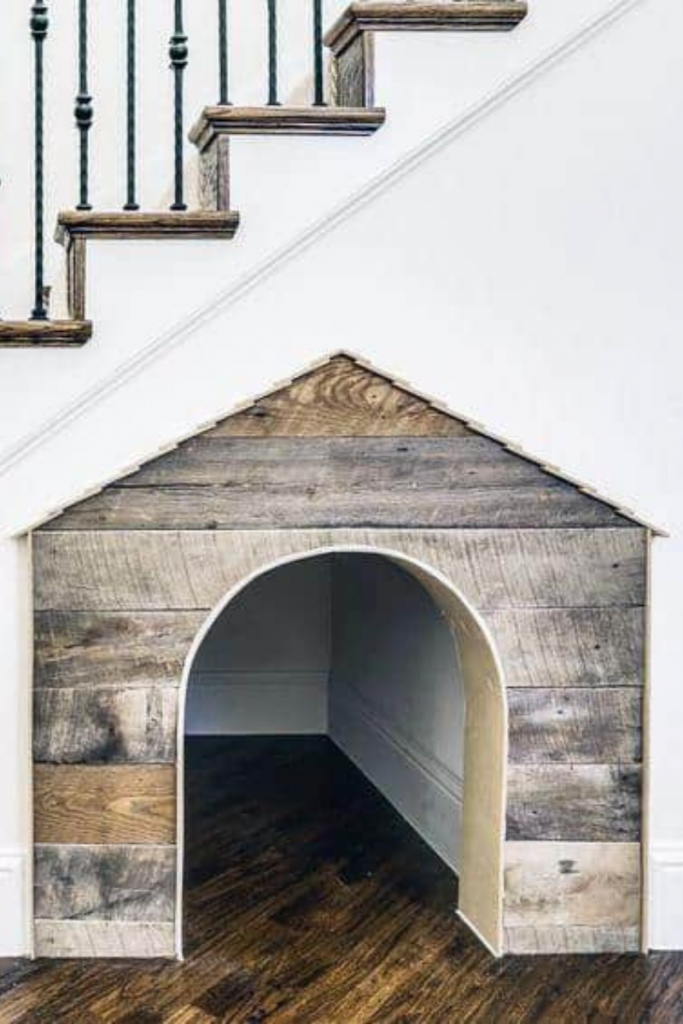
Versatility: Staircases can be used for more that just walking from one floor of a house to another. Staircases can be transformed into bookshelves, or moveable walls that lead to hidden rooms. You can cut a hole in your floor and add a spiral staircase tucked away in the corner that leads down to a wine cellar, or basement when there is limited space available for a larger staircase.

There are many different design options available when customizing your staircase that allow you to create a beautiful stair that you would be proud to show off.

Top Traits of Modern Railing Systems

A beautiful staircase has the potential of becoming a stunning focal point in any home. In fact, the staircase is an accent piece by nature. It has been an eye-catching element from the beginning and, as its design evolved over the years, its status never changed. In fact, it became more and more important and interior designers have made it the star of many of their projects.

A beautiful staircase is defined by several different aspects. The design is, of course, very important. But, most often, it’s the handrail that makes it stand out. The handrail has gradually transformed from a simple element designed to provide safety and protection to a wonderful and chic design detail. In the new modern design it does goes without says that less is more when designing your railing. Minimalistic designs can still be chic and provide an elegant focal point. Many modern staircase railing designs incorporate industrial materials such as glass and steel. Simple color palettes, open spaces, and geometric elements are common modern design aspects as well.

Using a modern stainless steel handrail system, that can compliment free-standing stairs, can be very beneficial if you have a small living space. Using this open riser construction concept can allow unobstructed vies across your space. The steel bars can also allow additional openness and add to your space’s modern appeal.

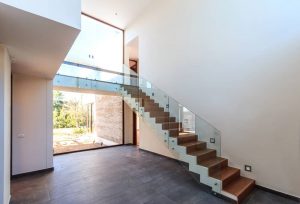
Another option for free-standing stairs is to have a sleek glass railing that is of course designed and constructed for ultimate safety and quality. Using glass can further open your space and help to make your space appear larger than it really is.

Using a cable rail is an excellent way to accent a straight stair. These unique staircase systems can include a combination of open and closed risers, with the upper segment open and transitioning to closed risers below. The parallel lines of the stainless steel cable railing offer a simple contemporary look.

The staircase is also a design element that provides you with the opportunity to add an artistic touch to the décor. Even though they are quite rare, staircases that are entirely made of metal can be an interesting focal point. They usually have an industrial-inspired look. You would want to make sure that the rest of your house was designed in the same fashion so your staircase doesn’t look random and like it doesn’t belong in the space.

A very common combination in the case of modern staircases is that between wood and metal. That’s because the resulting design is usually somewhere between classical and contemporary. If you are remodeling and want to do something new to your staircase, this is the easiest option. Tearing out a railing but keeping wood stairs is an inexpensive option to turn an old staircase into something breathtaking. Wood staircases can easily be stained or painted to match the rest of the house, while the railing can be torn out and changed to add some personality to your staircase.

Whatever you decide to do to your staircase, make sure that it includes your personality and flair, because you will be looking at it everyday!

Choosing Between Spiral and Straight Staircases

Straight or spiral staircases?: Which design is the best choice for your home

If you’re moving into a new home, or are remodeling your house then chances are that you have already thought about how important the staircase is to complete your home. And since there are a number of staircase designs and materials to choose from, you want to make sure that you find a staircase that fits the style of your home and the needs of your family.

Two of the more popular staircase designs are straight and spiral staircases, each of which have their own pros and cons. To help you learn more about straight and spiral staircases and what the advantages and disadvantages of both types are, we have compared some of their features below.

Pros of spiral staircases include:

  • Spiral staircases offer a modern and space-saving alternative to the inefficient layout of other traditional stair designs, providing more efficient floor access than the average layout.
  • A traditional flight of straight or winding stairs can eat up lots of area in a room, making it difficult to perform the full range of activities that you would like to in your home. A spiral staircase on the other hand, virtually cuts the amount of space being taken up by the actual stairs in half due to the corkscrew design.
  • A spiral staircase can be placed in any corner of your house, unlike a traditional staircase which has a limited amount of placement options.
  • Moreover, the spiral staircase design is safe and timelessly attractive. A spiral staircase can be implemented in almost any small space, inside and outside.

Pros of straight staircases include:

  • Straight staircases can be designed for any interior design style; 3 of the straight staircase designs made primarily from metal include:

-Single stringer (also known as mono stairs): straight staircases made with single stringers are usually the most popular among straight stair designs, and for good reason too, as a single stringer staircase is incredibly durable, and precisely engineered.

-Double-stringer: this staircase design is ideal for creating an open, unique look that is also an economically sound option for homeowners.

-Pan-type: a pan staircase design can be designed as an architectural addition to your home, or simply used as an industrial set of stairs for a garage or workshop, and can be filled with stone, cement, or tile treads.

Additional factors to take into consideration:  

  • Materials: While a professional staircase contractor can engineer stairs out of most construction materials, contemporary spiral staircases are typically made with steel or plywood, while straight staircases are more than often made from hardwood with carpet on the treads. The key is to choose a staircase material that will fit with your interior design, your budget, and your family’s needs.
  • Safety: Spiral staircases are by no means dangerous and when engineered and installed by a professional staircase company, they are just as safe and secure as any other stair design; however, homes with small children or people with mobility issues may find a straight staircase a better fit for their needs.
  • Space: As previously mentioned, a spiral staircase is particularly efficient when it comes to space-saving, which is why it’s always a good idea to make sure you have the necessary floor space and plan prior to committing to a straight staircase design.

Please feel free to get in touch with your Sacramento stairs contractor, iStairs, if you have further questions about the differences between straight and spiral staircases.

Your Staircase Can Complete Your Home’s Décor

When redecorating the interior of your home, it’s easy to forget about incorporating the staircase into the design because we don’t usually think of the stairs when planning home improvements projects. It’s time to start rethinking the way we look at role our staircase can have in completing the overall décor of our homes. After all, the staircase is a focal point of the interior design of many homes so it makes perfect sense to use your staircase as a way of completing your home’s décor!

One of the first things you need to understand when deciding on what style of staircase will best complement your decor is the differences between the main types of design that staircases are modeled after, namely modern, contemporary, and industrial.

Modern: Often referred to as Mid-Century Modern because the style harkens back to the 1920’s-1950’s, a staircase in the modern design would be one that is simple, sleek with straight lines and basic geometry in the curves and angles. A home with a modern sense of decor can be complemented by a functional staircase, with clean lines, and neutral colors and materials.
Contemporary: Contemporary design on the other hand refers to a style that is always in flux based on what is in ‘in’ at the time, so whereas modern design is based on a specific time period, a contemporary decor focuses on bold color, neutral elements, and basic shapes and forms. Contemporary staircase trends include stainless steel and glass features.
Industrial: One style that is on the rise in popularity is industrial interior design, and there are many creative and unique ways to complete your home’s overall industrial decor with a strong staircase design. The industrial look is often characterized by the use of rough and earthy metal and wood, utilitarian objects, and a combination of other styles to create a sort of warehouse, manufactured appearance.

Once you understand the difference between what the various styles have to offer in terms of your home’s interior decoration, you will then have a better feel for what type of staircase can best complement that design. A professional staircase contractor can also help you figure out a staircase design to complement the interior features and accents of your home, so don’t hesitate to ask for help before choosing a design!

Another option that is always available when it comes to improving the interior decor of your home is creating a custom staircase. Choosing a custom staircase is ideal for completing a redecorating project because you can design a custom staircase in any style that you desire, be it modern, contemporary, or industrial. A custom staircase design gives you the opportunity to make a unique statement with the interior of your home, and whether you are looking for a modern wooden open staircase or an industrial steel spiral staircase, working with your stairs contractor will give you all the opportunities you need to make the right choice for you and your home.

Contact iStairs for more information on how you can get the perfect stairs to go with your decor!

Guidelines to Create a Beautiful and Functional Staircase

How to Choose the Right Staircase for Your House

Your Staircase Can Complete Your Home’s Décor