Renovations

Renovating your staircase is a perfect way to spruce up your entryway; and while most people get a general idea on what they want to happen, it’s often best to read more and reassess your plans before starting your project. Our blog on renovations can give you a better idea on designs, costs, and safety of your stairs.

Best Staircase Flooring

October 26, 2016

How to Build Stairs

January 19, 2016

Guide to Refinishing Your Worn-Out Staircase

After a while your hardwood treads for your Sacramento stairs could potentially experience some wear and tear. Especially the high traffic staircases in your house that squeak or have become discolored, might call for some additional attention.

If your wood stairs need a makeover, start by checking for any needed repairs. Loose or rubbing parts often cause squeaks, a common problem. You can try to heal the squeaking tread by nailing down a part that has begun to separate from the riser, or it might be time for a renovation with new treads.

If the necessary repairs are strictly cosmetic you might want to consider taking on a refinishing project so that your wood staircase looks brand new.

Sanding

Your first step is to sand your tread and the bullnose on the front. This will require you to rent a floor edger-sanding machine which can be acquired at any local hardware store. For rough or painted boards you will want to start with 20- or 30- grit sandpaper and then move on to 50- or eventually 90- grit sandpaper. However, if your treads are already varnished, it is recommended that you start with a 36- grit sandpaper.

The sander will do a good job at basic coverage, but you will want to perfect your sanding job with a hand scraper for small scratches or areas that the sander missed.

A vital step for standing is removing the dust after all the sanding is completed. Dust can collect in the internal pores of the wood and cause problems during staining, so be sure to do more than just a surface sweep. The best method is to run a vacuum over the stair to make sure all the dust is sufficiently removed.

Staining

The best way to ensure that you will be satisfied with your staining project is to experiment first on a scrap piece of wood. Especially water-based stains, sometimes will need to be diluted or maybe they will need extra coats in order to achieve your desired shade. It is so important that you apply the stain and the intended top coat so you know exactly what to expect from your finished project.

When brushing on the stain be sure to move quickly across the surface for an even finish. Then, be sure to use a cloth to remove all excess stain and be sure to leave no puddles. Using a stain pillow to apply the finish is a good investment because they let you move fast and stretch your coverage.

Top Coat

When it comes to choosing a top coat you have two option, water-based or oil-based. Each have distinct pros and cons.

A water-based top coat will dry really quickly and have little odor. However, they do sometimes raise the grain.

An oil-based top coat is generally a more durable, long-lasting option that flows better onto the surface than a water-based option. On the down side, they do take much longer to dry, up to four hours.

Once you decide which top coat option works best for you be sure to apply multiple coats and give each enough time to fully dry.

If you’d rather have a professional take care of this, please give iStairs a call. iStairs is your Sacramento stairs contactor.

Best Staircase Flooring

At iStairs Inc.,lopped we are devoted to making your vision for your customized staircase a reality. The choice of floorings for the staircase is a vital piece of your vision. Each style needs to be considered for its visual appeal, safety and price.

Find the perfect option for staircase flooring

Carpet

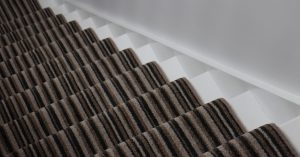
One of the most popular stair floorings is a carpeting option. Its timeless appeal is hugely versatile with a wide range of colors, textures, and styles. One option is a loop style carpet in which the strands of looped back into the carpet and left uncut. They are usually used for a shaggier, more casual look for a residential staircase. Another style is a patterned look crafted with dramatic visuals woven into the carpet. This style usually has a shorter cut height and a more formal look. One more option worth mentioning is the frieze style. This style has a soft, twisted look, also recommended for more casual settings.

Besides the versatility in style, carpet flooring provides safety. The safety of your home and family is too important to make compromises. Staircases are already an area of the home prone to danger, so little adjustments to enhance safety should be strongly considered.

Other considerations to be made are the shorter life of carpet flooring and the costs of cleaning. It’s recommended that carpet is vacuumed twice a week. (which depending on the stair width can be difficult) and professionally cleaned once a year.

Hardwood

Another visually appealing flooring option is hardwood. Hardwood staircases are elegant, durable and ageless. While hardwood does not offer the same safety benefits as carpet, it can be kept much cleaner. Dust and dirt that collect and sink into carpeted flooring can be quickly swept up from a hardwood floor. Not to mention a spill that would stain a carpet can be wiped up with no long-term problem.

There is also a wide variety of hardwood options to consider for your beautiful staircase. There are so many colors, styles, and stains available that no matter what your unique needs and preferences are you can find a wood option that fits your home. A few popular options include white oak, red oak, hickory and Brazilian cherry.

Price, of course, varies depending on the style and species you choose, but out talented estimators can give you an accurate quote for your project when you fill out a bid request .

Eco-Friendly

For those of you who are looking to support the health of our planet while building your dream staircase, you have options.

  • Cork: This option’s natural elasticity makes it comfortable, provides thermal insulation and it recovers quickly from mark or dents. It can serve as a natural insect repellant and it’s made from the bark of the cork oak tree, which grows back every three years.
  • Bamboo: Bamboo is a harder than your maple or red oak options and naturally water and insect resistant. Bamboo grows quickly and abundantly, so it is a sustainable option for flooring.
  • Carpet Padding: Some carpets come with padding containing plastics from petroleum. An eco-friendlier option is to choose a carpet with lightweight padding or a padding specifically made from recycled materials, such as 100% recycled cotton.

The experts at iStairs are familiar with all these options and are ready to help you achieve your dream staircase. Call us today to find out how we can help!

Benefits of a Metal Staircase

A metal staircase is alluring and unique, sure but did you also know that one of the main benefits of having a metal staircase is related to the versatility and durability of the material itself?

That’s right folks, a metal staircase is indeed beneficial in more ways than one, and even allows for a wide range of designs and styles!

To gain a better understanding of the benefits of metal staircases, take a look at some of the reasons listed below, and get in touch with your stairs contractor, iStairs, if you have further questions!

  • Extreme utility: The versatile nature of metal lends itself well to the construction of stairs, and as such, there are a number of unique shapes, sizes, and layouts that are possible to make when creating a metal staircase.Homeowners are also pleased when they learn that there are any numbers of styles on which to build a metal staircase, whether that style is traditional, simple, modern, or elegant. A metal staircase is also an ideal model for both indoors and outdoors, no matter how big or small the size.
  • Cost-effective installation and labor: Relative to other building materials, a metal staircase is one of the cheaper stair products to produce and install, which means that you end up saving money while still benefiting from the high-quality staircase made and assembled by professional stair engineers and contractors.But more importantly, you won’t have to compromise on style just to save a few bucks with a metal staircase.
  • Minimal maintenance and upkeep: Also unlike most other staircase materials, a staircase made of metal is incredibly easy to clean and maintain, a feature that will continue to benefit you for as long as you live in your house.As compared to a traditional wooden staircase upholstered with carpet that needs constant maintenance and care just to look presentable after a few years, a metal staircase requires very little cleaning other than the basic dusting and sweeping every so often.Many families also come to appreciate the fact that having a metal staircase is much less noisy to move around on than say, a wooden staircase.
  • Longevity and durability: Yet another reason why having a metal staircase is beneficial is the fact that they are very durable and will last as long, if not longer, than any other building material.A metal staircase will be a solid investment for your home, and with just the right design to complement the individual character of your home; such an investment can even add value to your home as well.

Now can you understand a little better just why metal staircases remain such a popular choice among both homeowners and contractors alike? And given the fact that your chosen professional stair contracting company will work to deliver a product that suits your unique style and taste, while also providing the benefits listed above, what’s not to love about a metal staircase?

For further help on how to make this become a reality for your home, contact iStairs, stairs company today!

Simple Steps to Planning a Custom Staircase

The staircase of any home has the potential to make a statement but just think about the type of statement made by a unique custom staircase design, something truly unmatched. A custom staircase design can really enhance the value and beauty of your home, giving your house the sense of character you’ve been looking for. And while elaborate and detailed staircases do take time and skill to design and assemble, many homeowners are pleased when they find out that the planning process is nowhere near as complex of a process. In fact, with some determination and a clear vision in mind, planning the design for your own custom staircase can be a simple and fun process! To make things easy, we have simplified the process of custom staircase design down to four basic steps in order to show you how you can have success with your custom staircase design experience!

  1. Step one: Figure out what inspires you. As with any custom design project for your home, a great idea begins with inspiration. You may already have a vision in mind of what you want the finished product to look and feel like, or, like many homeowners, you might just know what type of material you want your staircase constructed out of. Whatever the case may be with your home, be sure to ask your staircase design contractor a few important questions, including:
  • What are the themes and elements of the interior design of your home?
  • What will the interior dimensions and space layout inside your home allow for in 
terms of staircase design?
  • Will a straight or a curved custom staircase make the most sense for your house?
  • What styles of balusters and riser treads are most attractive to you?
  1. Step two: Choose your staircase product. After gathering the necessary information to get a solid understanding of what type of custom staircase you want for your home in the inspiration phase, the next step to tackle is choosing the specific layout and design you want for your stairs. Your stairs contractor will walk you through the various choices and help you select the best option for your home based upon your unique styles and tastes.
  2. Step three: Picking your style. Every custom staircase design conveys a sense a style, so the next step includes determining what specific style you want your staircase design to be built in. Four of the common style choices include Craftsman style, Traditional, Modern, and Ornamental Metal.
  • Curved staircase: A curved staircase is a popular choice for custom designs, as a round staircase brings a unique sense of elegance to a home, and can be made in many different shapes and layouts.
  • Straight staircase: The classic straight staircase design can beautifully complement a home with a modern sense of style.
  1. Step four: Complete the collaborative design process with delivery and installation. Once you have completed the design portion of the process with your staircase design team and the all the necessary parties approve the plans, your staircase will be ready for construction and installation! And based on your needs and personal level of construction skills, you can choose a delivery and installation method that works best for you.

Whether you just want the staircase delivered to your home to be installed by a trim subcontractor, or if you prefer a complete installation with a pre-fit handrail, you can be sure that your custom staircase design contractor, iStairs, will give you the results you want!

Stairs Makeover 101: Replacing Your Carpet With Hardwood

Sometimes, we’re not just happy with what our stairs look like. Sometimes, our whole house is dazzling and then when you glance upon the stairs, you just know that something’s wrong there. Most cases where the homeowner is not happy with their stairs are the following:

  1. They bought a previously owned house and they have a different preference than the old homeowners;
  2. They bought a new house but it was finished and the designer had different taste than theirs;
  3. The stairs has gone boring over time; or
  4. The carpet of the stairs had been stained or torn.

If you’re not happy with your what your stairs look like, maybe it’s time for a stairs makeover! Your stairs deserve a transformation too!

In this article, we will give you tips on how to remodel a carpeted staircase into a hardwood staircase. Let’s start your staircase makeover now!

NOTE FROM ISTAIRS: First of all, determine whether this project is within your capabilities.

iStairs appreciates those who know that their stairs are a big part of their home and want to create a staircase masterpiece on their own. But if this makeover is beyond your abilities, consider getting professional help. iStairs can assure you that we can transform your carpeted staircase into a stunning hardwood staircase. But if you believe that your DIY skills is up for the challenge, then give it a go.

Just make sure that if you get stuck along the way, it’s best not to aggravate the situation and just call iStairs for help. If you have custom staircase, then you would most likely need our help. Always remember that iStairs is just a call away, ready to give your stairs a complete transformation.

If you believe that this project is well within your limits, then here are the steps to follow in your carpet to hardwood makeover:

  1. Out with the old.

Remove the carpeting, banisters, and spindles. Make sure you are left with bare stairs. No railings, just the treads and the risers.

  1. In with the new.

Measure each tread carefully and accurately and cut your hardwood into the measurements. After measuring, cut the hardwood, then install them. Make sure that each hardwood is securely installed. If possible, also change the wall moldings of your staircase.

  1. Beautify your new stairs.

After installing hardwood into each step, it’s time to work on making your stairs an eye candy. Stain and or paint the risers and the hardwood into your desired color. Your risers can be the same color as your hardwood but painting your risers white can make a beautiful work of art, giving more emphasis to the hardwood. Re-install the railings and make sure your rails and newels match with the hardwood for a perfect look.

  1. Enjoy your new stairs.

Your new staircase is bound to be beautiful. Hardwood truly is a strong and wonderful staircase design. Again, if you need help in any of the steps in giving your staircase a makeover, just give us a call.

iStairs Stair Photo Gallery

If you are planning a major home interior renovation or are working on the plans for your future custom home, then you are likely debating on which staircase design will work best of your home, both in terms of function and in terms of character and appeal. Not only is the staircase a frequently used element of a house, it is also a main statement piece with the potential to bring out the unique character and style of a family home, especially when designed by a professional and creative Sacramento stairs builder!

While the expert staircase engineers and contractors have experience working with all building materials, from metals to woods, certain styles and materials work better in some staircase designs than others, and that is why it is important to do your research and familiarize yourself with the multitude of options currently available at your Sacramento stairs company, iStairs Inc.

One particular species of wood favored by many homeowners and stairs contractors alike is alder wood, simply because of the numerous qualities and characteristics, which make it an ideal material for building stairs. First and foremost, alder is particularly easy to cut and matures much faster in comparison to other hardwoods; likewise, it’s softer and more elastic properties lend well to the carving of intricate designs and fantastic looking finishes. Additionally, alder works well for staircases as it can easily and efficiently be bolted, glued, and worked on by power tools. Check out the photo gallery of some of the alder wood staircases work recently finished by iStairs by clicking on the links below:

Alder Gallery

A beech wood staircase also makes for an intriguing staircase design due to it’s workability and even-pored structure, which makes it easy for Sacramento stairs contractors to create a truly customizable look for any style home! The links below to the beech wood staircase gallery by iStairs will surely attest to the versatility of designs and shades offered by beech wood.

Beech Gallery

Now when it comes to durable and truly unique types of materials to build a staircase with, there are very few species of wood that can rival the beauty of cherry wood. In addition to being popular and memorable for its red hue and satin-like elegance cherry wood is perfect for staircases because it is easy to clean and maintain. Just look at the beautiful styles created in cherry wood by our professional Sacramento stairs engineers at iStairs, by clicking on the links below:

Cherry Wood

Maple staircases continue to be popular installations in new homes and remodels, due to the various types of maple available and the multiple staircase designs, which are complimented by this particular species of wood. Also, contrary to what many homeowners believe, according to expert Sacramento stairs contractors, maple is durable and even shock resistant. The majestic beauty of maple wood staircases can be seen here:

Maple Gallery

While checking out the extensive photo gallery of staircase designs and styles in alder, beech, cherry wood, and maple, be sure to look at the unique selection of specialty staircase designs in the specialty gallery, to get a look at the remarkable custom work done by iStairs as well!

Choosing the Right Carpet for your Stairs

The process of choosing the right type of carpet for the stairs of your home is one to take seriously because poorly installed carpet, or carpet that is of poor quality, can really impact the safety of your stairs and the beauty of your home.

While many homeowners may at first think that carpet selection is the only important thing to consider when choosing carpeting for the stairs in their home, it is also just as vital to select the right carpet installer with a strong reputation for providing quality carpet installations and excellent customer service.

So in an effort to get you on the right track towards choosing the best carpet for your stairs as well as selecting the right company to do the job, here are some tips and things to remember along the way!

  1. Fiber quality matters: No matter what type of fiber your carpet is made of, the general rule of thumb is that the more tightly woven that the fabric is, the better the carpet will be able to withstand abrasion. Long individual fibers for example, cause less shedding and are more likely to remain in the carpet. Remember also that you can discern much about the quality of a carpet based on how it feels; a quality yarn feels soft, while yarn of poor quality feels coarse and dry.
  2. The properties of wool make it a natural choice for carpet: Wool is an exceptionally durable and naturally beautiful fiber, and since wool has a natural tendency to resort to its original shape after being pressed on, this fiber makes for the ideal carpet material. Moreover, wool is easy to clean as the way its fibers are arranged makes it possible for dirt and dust to be easily removed.
  3. Choose carpet color wisely: While the colors ivory and pale beige are typically the most popular choler choices for homeowners, such colors are most practical in areas with light traffic, whereas stairs and entryways are best suited for taupe or mushroom color.
  4. Carpet texture: Carpet texture is one of those details that you wouldn’t normally think about prior to selecting a carpeting material but it actually does make a difference when it comes to choosing carpets for areas of high traffic in your home. Since the stairs are a high traffic area, it would be wise to consider a texture that is capable of hiding stains and footprints, such as a combination of loops and cut pile.
  5. Carpeting on stairs is important for safety: A problem with the carpeting on your stairs could potentially be very dangerous when walking on the stairs, and that is why it is crucial to have a quality installation performed by experienced professionals. Therefore, if you really want the job done right you must take the time to find a quality carpet company and installer with a proven record of customer satisfaction, instead of a company who just subcontracts the labor. Remember, it’s not just the quality of the carpet, but the quality of the installation that matters when it comes to choosing the best carpeting for your stairs.


How to Build Stairs

When it comes to designing and constructing a quality staircase, the old carpenter’s adage of ‘always measure twice and cut once’, is something you will need to remember and practice throughout the entire process on how to build stairs.

Since functionality is the most important element of a staircase for basic safety reasons, it is imperative to make precise and accurate measurements and cuts when designing and constructing your stair design. But prior to actually starting the process of stair design, be sure to consult both local and national building code requirements to be certain that your staircase will be safe and up to all standards. Remember: the art of the carpenter-built stair is not one easily mastered, so it will take more than the basic information presented here to understand the more nuanced details of measuring and cutting.

A Guide on How to Build Stairs

There are several measurements you will need to calculate and verify in order to complete your stair design, here are some of the fundamental measurements you will need:

  • The size of your stairwell, leaving sufficient headroom so as to have enough space for your head when walking up and down the stairs (believe it or not, it is actually not uncommon for carpenters to forget this calculation only to realize at the end of construction that the stairwell is too short!).
  • The number of risers (the vertical space between the treads) and the number of treads (the horizontal walking surface).
  • The length of the stairwell-the width of the upper floors vertical shaft in which the stairs are located).

Once all of the calculations and measurements have been checked and rechecked, it is time to start assembling your stair design. Here are the main constructing steps, summarized but not limited to the following 11 steps:

  1. Lay out the stringers, which are the support of the treads and risers, by setting the rise and run of the stair on the framing square.
  2. Mark off the number of treads and risers, being sure to start with the first riser and end with the top riser, followed drawing in the second floor line.
  3. Repeat for all 3 of the risers.
  4. Double check the stair design by making any necessary final adjustments to the stringers, after taking into account any changes to the top and bottom risers.
  5. Once the stringers are correctly laid out, it’s time to cut the triangle portions off of the framing square. Check the accuracy of the stringers by placing them together to see if they align; if they do not, you must make adjustments.
  6. Position the right and left stringers on top of the 1-by-12 inch skirt boards, which are nailed together, so then the stringers, can be nailed directly on top of the dry wall (if no dry wall, you must fill out the stringers to the thickness of the wall and nail or screw in place).
  7. Mount the center stringer to the top of the header and the blocking at the floor.
  8. After the stringers are in place double check all the tread cuts for level and plumb, in every direction, and also to make sure that the top and bottom risers allow for the finished tread height.
  9. Next, rip and nail the risers into place and then glue them as well.
  10. After cutting the treads to the correct length, glue and nail them into place.
  11. Finally, you will likely need to mount a handrail, be sure to mount it all 34 inches above the leading edge of the tread, and that it contains a wall rail bracket screwed into a stud or backing every 4 feet.

Building stairs can be a difficult and confusing task. That is why iStairs is ready to help you get the stair design you want. Call us today to find out how we can take care of everything for you!

How to Fix Stair Scratches

The beauty of hardwood stairs does not have to fade with the accumulation of scratches due to the natural wear and tear of foot traffic, so long as you know the proper way to fix and repair stairs with scratches.

[Read more…]